


Sales Compensation Analyst: Role, Skills and Tools
Explore what a sales compensation analyst does, including core responsibilities, key technical skills, salary modeling workflows, and modern ICM tools.


- A sales compensation analyst administers incentive compensation plans, models payout mechanics, reconciles commission disbursements, and maintains operational governance across commercial teams.
- Essential competencies include quantitative spreadsheet modeling, CRM and billing architecture literacy, incentive compensation management tool administration, and cross-functional dispute resolution.
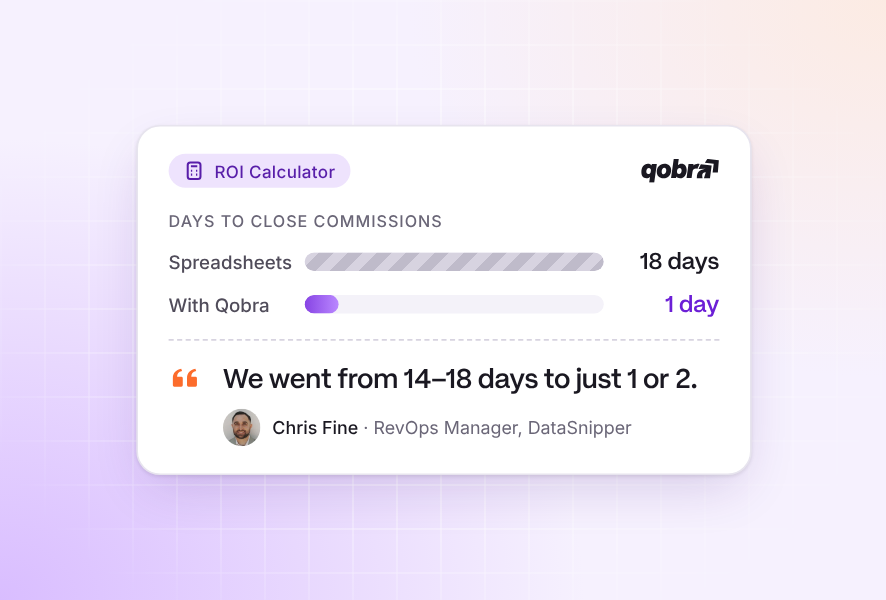
- Modern go-to-market organizations replace brittle manual spreadsheets with structured validation workflows, version-controlled audit trails, and automated calculation engines to maintain commission accuracy.
Explore what a sales compensation analyst does, core responsibilities, key technical skills, salary modeling workflows, and how modern ICM tools streamline operations.
What is sales compensation analyst?
A sales compensation analyst is an operational and financial specialist responsible for administering, calculating, modeling, and auditing variable incentive compensation programs for revenue-generating personnel. Positioned at the intersection of revenue operations, corporate finance, and sales leadership, this professional ensures that commission payouts follow plan policies, align with broader financial budgets, and deliver transparent earnings visibility to commercial teams.
In modern business-to-business organizations, sales compensation represents one of the largest and most volatile variable expenses on the corporate income statement. While executive leadership designs overarching go-to-market strategies, the sales compensation analyst translates those commercial objectives into rigorous mathematical rules, operational thresholds, and monthly disbursement workflows. The role extends far beyond clerical payroll calculations; it encompasses data architecture, regulatory auditability, behavioral incentive modeling, and frontline stakeholder management.
Core Role Definition — The sales compensation analyst translates executive commercial strategy into verifiable commission mechanics, maintaining data hygiene, payout governance, dispute resolution, and quota tracking across sales teams.
As organizations expand across diverse segments, regions, and product lines, incentive complexity compounds rapidly. Direct sales account executives, business development representatives, customer success managers, and sales engineers each operate under distinct performance metrics. Managing these concurrent frameworks requires a specialist who understands how booking terms, contract revisions, billing events, and currency exchange rates interact with individual payout agreements.
Furthermore, the analyst serves as the primary operational link between corporate finance and sales teams. Finance requires accurate commission accruals, predictable cash outlays, and strict internal controls to comply with accounting standards. Simultaneously, sales representatives demand timely, transparent, and comprehensible statements to maintain morale and trust in company leadership. By maintaining balanced governance, the analyst safeguards corporate margins while keeping commercial teams focused on revenue generation.
Organizations designing formal incentive frameworks must coordinate role charters, quota allocations, and performance incentives into unified sales compensation plans that provide commercial clarity while protecting fiscal stability.
How sales compensation analyst works
The daily execution of a sales compensation analyst balances cyclical administrative deadlines with strategic analytics. Depending on organizational size and compensation cadence, operational tasks follow strict monthly, quarterly, and fiscal-year workflows. Understanding how this role operates requires examining its core functional domains across data processing, strategic analytics, governance, and technology management.
Operational Processing and Calculation Workflows
At the close of each compensation period, the analyst executes an end-to-end reconciliation workflow. This begins with data extraction from CRM platforms, enterprise resource planning engines, and subscription billing systems. The analyst validates that recorded deals meet recognized booking criteria, verifies customer sign-offs, inspects contract values, and checks for special contract terms such as payment contingencies or deferred delivery dates.
Once transaction data is validated, the analyst executes calculation algorithms against active plan rules. This involves evaluating quota attainment baselines, applying tiered accelerator percentages, calculating milestone bonuses, and accounting for split crediting between collaborative sales roles. For teams seeking a structured foundation on baseline rates, quota ratios, and variable mechanics, our sales commission guide offers detailed operational frameworks for structuring commercial incentives.
Following calculation runs, the analyst prepares detailed commission statements for managerial review. Operating within predefined review windows, frontline sales managers verify deal attribution, acknowledge calculated payout totals, and approve submissions. Once managerial sign-offs are complete, the analyst compiles final payout files, reconciles gross totals against finance accrual estimates, and transfers payroll disbursement batches to the payroll department for direct deposit processing.
Strategic Plan Modeling and Quota Analytics
Outside of monthly processing windows, the compensation analyst engages in forward-looking financial modeling and plan optimization. Before corporate leadership rolls out new compensation structures, the analyst models hypothetical revenue distributions to evaluate plan sensitivity. By running historical deal records through proposed tier configurations, the analyst identifies whether new accelerator thresholds could trigger disproportionate expense growth or create unintended payout cliffs.
Strategic analytics also encompass cost-of-sales and attainment distribution studies. The analyst examines what percentage of the sales force meets, exceeds, or falls short of designated targets across different product lines, market territories, and experience cohorts. If attainment is heavily skewed toward a tiny fraction of top performers while the broader team misses baseline quotas, the analyst highlights this structural imbalance to RevOps leadership, recommending quota rebalancing or modified floor thresholds.
Furthermore, the analyst tracks compensation expense against realized revenue margins. When sales reps discount software licenses or offer customized service commitments to close high-value transactions, overall company profitability can fluctuate. The analyst evaluates how margin-based commission adjustments influence sales behavior, providing leadership with empirical data to guide pricing policies and variable pay incentives.
Governance, Policy Management, and Dispute Resolution
A primary responsibility of the sales compensation analyst is maintaining the integrity of compensation governance. Every compensation program requires formal terms and conditions governing crediting rules, mid-year quota adjustments, leaves of absence, windfalls, and terminations. The analyst drafts and distributes plan documentation, tracks signed participant acknowledgments, and archives historical plan revisions for audit preparedness.
Dispute management represents a substantial portion of regular rep interactions. When sales reps identify discrepancies between their personal calculations and published statements, they submit formal inquiries to the analyst. The analyst investigates transaction logs, reviews CRM deal stages, verifies crediting assignments, and delivers transparent written explanations. When an inquiry reveals a genuine data omission or approved exception, the analyst logs an adjustment with full audit documentation to preserve accounting integrity.
Governance also encompasses managing policy adjustments when commercial agreements dissolve unexpectedly. When a client cancels a multi-year agreement prematurely or defaults on invoice obligations, corporate terms often require commission reversals. Understanding clawback how it works examples best practice enables analysts to execute equitable, contractually sound adjustments that protect cash reserves without degrading rep motivation.
Cross-Functional Alignment and Stakeholder Coordination
The compensation analyst acts as a diplomat across competing internal departments. Sales leadership prioritizes rep motivation, competitive earnings, and aggressive quota targets. Finance leadership emphasizes expense predictability, cash preservation, and strict adherence to revenue recognition rules. Legal and HR teams focus on statutory compliance, clear employment agreements, and equitable pay governance across demographic cohorts.
To align these competing priorities, the analyst participates in cross-functional compensation committee meetings, presenting data-driven assessments of compensation effectiveness. By translating complex transaction logs into clear financial summaries, the analyst equips executive stakeholders to make grounded decisions regarding annual plan designs, special performance incentive funds (SPIFs), and commercial resource allocations.
Sales compensation analyst examples
To understand how an analyst navigates real-world compensation administration, review the following labeled illustrative calculation scenarios. These examples demonstrate how policy rules, mathematical tiers, and transaction timing govern monthly statement line items.
Illustrative compensation analyst calculation scenarios across common operational workflows.
| Scenario | Rule or calculation | Result |
|---|---|---|
| Tiered Accelerator Transition | An enterprise account executive with an annual quota of $1,000,000 achieves $950,000 in cumulative bookings before closing a $200,000 software contract. The plan pays 10% base commission up to 100% quota attainment and 15% on bookings exceeding 100%. The transaction bridges the threshold: $50,000 is credited at 10% ($5,000) and $150,000 is credited at 15% ($22,500). | $27,500 total commission credited to the monthly statement ($5,000 base tier plus $22,500 accelerated tier). |
| Multi-Role Split Crediting | An Account Executive and a Sales Engineer collaborate on a complex $180,000 annual contract value expansion deal. Under company policy, the deal qualifies for a 70/30 credit split. The AE commission rate is 8% ($180,000 * 70% * 8%) and the SE rate is 4% ($180,000 * 30% * 4%). | AE receives $10,080 commission; SE receives $2,160 commission. |
| Ramp-Up Recoverable Draw Reconciliation | A newly hired representative receives a $5,000 monthly recoverable draw advance during a three-month ramp period. In month two, the rep closes deals generating $3,200 in gross earned commission. Calculation: Disbursed amount = $5,000 total payout; Carried draw debt balance = $5,000 advance - $3,200 earned commission. | $5,000 cash disbursed for the month; $1,800 outstanding draw balance carried forward to month three. |
| Invoice Default Commission Reversal | A customer signs a $120,000 annual software subscription resulting in an initial 9% commission payout of $10,800 to the rep. At day 75, the customer enters liquidation and defaults on initial invoice payment, breaching the 90-day cash collection clause. Calculation: Payout reversal of 100% uncollected balance. | -$10,800 clawback adjustment deducted from the representative current monthly statement balance. |
| Multi-Currency Conversion Settlement | A European sales representative under a Euro base plan closes a deal billed at 100,000 USD. The monthly accounting standard fixes the corporate exchange rate at 1 EUR = 1.08 USD (or 1 USD = 0.9259 EUR). The representative commission rate is 7%. Calculation: (100,000 USD * 0.9259) * 7%. | 6,481.30 EUR commission credited to the employee statement. |
Illustrative Calculation Check — When verifying accelerator boundaries across high-value enterprise transactions, split the transaction value precisely at the quota threshold point before applying the elevated payout multiplier. Commercial teams can also model preliminary earnings with an interactive commission calculator to visualize threshold tiers before monthly statement finalization.
Beyond baseline quota tiers and split crediting, compensation analysts frequently oversee advanced variable structures such as advances and draws. When ramping new commercial representatives or launching emerging products with prolonged sales cycles, revenue teams often implement a draw against commission framework. The analyst monitors cumulative disbursements against monthly earnings, tracking repayment schedules across subsequent statement cycles until draw balances fully resolve.
Another frequent analytical task involves calculating performance bonuses and special commercial incentives. When a go-to-market organization introduces short-term SPIFs to promote a newly acquired product line, the analyst establishes tracking parameters in transaction databases, validates eligibility criteria, and calculates additive bonus payouts alongside standard commissions. Precision in modeling these incentives ensures sales teams remain energized while preventing unanticipated compensation budget overruns.
How to set it up, step by step
Establishing an effective, reliable sales compensation analysis function requires systematic planning, clear governance, and deliberate operational design. Whether an organization is hiring its first dedicated analyst or restructuring an established RevOps team, following an ordered setup methodology prevents calculation errors, minimizes administrative overhead, and builds institutional credibility.
- Define organizational reporting lines and role charter: Determine whether the sales compensation analyst reports within Revenue Operations, Corporate Finance, or Human Resources, clarifying the balance between daily operational administration and long-term strategic modeling.
- Centralize and standardize plan documentation: Consolidate all historical compensation plans, quota assignment letters, policy guidelines, and exception criteria into a secure, version-controlled repository accessible to relevant stakeholders.
- Map data pipelines and validation rules: Establish structured data integrations between CRM opportunity records, billing platforms, contract management systems, and enterprise databases, defining exact source-of-truth criteria for closed-won revenue recognition.
- Design standardized calculation templates and models: Develop auditable calculation logic covering base rates, tiered accelerators, split crediting, proration rules, ramp schedules, and cap structures to ensure consistency across all active rosters.
- Implement formal validation and managerial approval workflows: Establish multi-tier sign-off checkpoints where sales managers review deal attribution, RevOps verifies plan logic, and finance leadership approves final payout amounts prior to payroll transmission.
- Establish rep statement delivery and dispute protocols: Launch clear, accessible commission statements detailing line-item transaction credits, applied percentages, and quota attainment progress, accompanied by a formal dispute ticketing process with defined response SLAs.
- Schedule periodic variance reviews and executive plan audits: Institute quarterly performance reviews to assess budget versus actual compensation expense, quota distribution equity, and incentive effectiveness, utilizing empirical findings to refine future compensation cycles.
Executing this multi-phase framework effectively depends heavily on the technology supporting the analyst. While early-stage businesses often begin by tracking variables in manual spreadsheets, expanding commercial organizations rapidly encounter the limitations of manual modeling. Formula corruption, version ambiguity, and unrecorded adjustments introduce serious administrative friction.
To support this workflow, organizations equip the analyst with specialized software infrastructure. Transitioning to a dedicated sales compensation platform enables revenue teams to automate data ingestion, centralize calculation rules, enforce audit trails, and deliver transparent digital statements directly to sales representatives. Equipping analysts with appropriate operational software transforms the role from a reactive administrative bottleneck into a high-impact strategic asset.
Additionally, organizations must establish clear operational service level agreements between the compensation analyst and external teams. For example, setting strict deadlines for when sales managers must approve monthly deal credits ensures the analyst has adequate runway to perform reconciliation checks before payroll cut-off dates. Clear cross-functional expectations prevent month-end operational crunches and protect disbursement punctuality.

Common mistakes
Administering incentive compensation involves high financial stakes, complex data dependencies, and direct visibility to executive leadership. Operational missteps degrade sales morale, compromise corporate audit readiness, and introduce material financial discrepancies. Below are critical mistakes that compensation analysts and revenue leaders must actively identify and prevent.
- Managing multi-plan administration in disconnected spreadsheets: Relying on decentralized, unlinked workbooks inevitably leads to broken formulas, unversioned cell overrides, reference errors, and catastrophic calculation discrepancies during period-close crunch periods.
- Operating without immutable change logs and audit trails: Making manual adjustments to rep credits or override percentages without logging the business justification, timestamp, and approving manager leaves the company vulnerable during corporate financial audits.
- Calculating payouts on unverified CRM data: Processing commissions based strictly on self-reported CRM deal stages without verifying signed customer contracts, approved billing terms, or initial invoice receipts results in premature commission disbursements and subsequent clawback friction.
- Designing overly Byzantine incentive formulas: Constructing compensation plans with excessive performance hurdles, interlinked gates, and convoluted mathematical modifiers confuses commercial reps, diminishes the motivational value of the plan, and creates severe administrative overhead.
- Failing to establish formal dispute resolution protocols: Permitting reps to challenge payouts via informal Slack messages or ad-hoc emails leads to lost documentation, inconsistent dispute outcomes, and prolonged cycle times that delay monthly payroll finalization.
- Deploying plan modifications without prior scenario testing: Introducing new quota structures, accelerator tiers, or compensation policies directly into production rosters without stress testing historical data risks unintended payout explosions or demotivating earning cliffs.
- Isolating the compensation function from strategic GTM planning: Treating the compensation analyst purely as a back-office payroll clerk prevents leadership from leveraging valuable empirical insights regarding quota distribution, sales efficiency, and margin health.
Point of Attention — Commission disputes frequently arise from ambiguous policy language rather than computational errors. Documenting specific guidelines for split crediting, deal reassignments, and contract adjustments directly within compensation agreements eliminates ambiguity and reduces monthly inquiries.
Another prevalent operational failure is neglecting rep onboarding and ongoing enablement. Introducing a sophisticated incentive plan without thoroughly educating commercial teams on calculation mechanics results in widespread confusion and suspicion. Compensation analysts who host regular enablement workshops and maintain clear calculation documentation help reps understand exactly how their commercial activities drive variable earnings.
Finally, revenue teams frequently underestimate the time required to manage exceptions. Mid-year territory redistributions, parental leaves, extended medical leaves, and executive deal overrides occur regularly in growing organizations. When an analyst lacks documented, standardized exception handling workflows, each unique scenario consumes disproportionate operational time and risks perceived favoritism across the commercial roster.
How Qobra helps
Qobra provides dedicated sales compensation software designed to automate complex commission workflows, simplify plan administration, and give commercial teams transparent visibility into variable earnings. By replacing fragile spreadsheets with structured calculation architecture, the platform enables sales compensation analysts and revenue operations teams to manage variable compensation with high operational rigor.
According to the named primary publisher, Qobra markets a no-code plan editor, configurable rules, sandbox simulations, multi-currency support, validation workflows and dashboards. These administrative capabilities empower compensation analysts to construct and adjust intricate commission models, split rules, and tiered accelerator curves without relying on custom code or external technical consultants. Built-in validation workflows connect sales managers, operations, and finance teams within a single interface, ensuring every payout is verified, approved, and auditable before payroll processing.
To support rigorous plan testing before rollout, Qobra documents sandboxes as copies with their own plans, quotas, statements and reports for testing without changing live data. Analysts can use these isolated environments to model prospective plan adjustments, stress test new quota distributions against historical performance records, and inspect resulting statements without altering live operational data or impacting ongoing monthly payroll runs.
By uniting automated calculations, centralized exception governance, and transparent rep-facing dashboards, modern compensation tooling frees analysts from manual calculation maintenance, enabling them to focus on high-value commercial analytics and strategic revenue optimization.
Frequently asked questions
How does sales compensation analyst work?
A sales compensation analyst works by collecting verified CRM transaction data, calculating earned commissions based on structured plan rules, and resolving crediting inquiries. The analyst manages monthly review workflows with sales managers and finance, reconciling final payout figures before transmitting approved commission disbursements to payroll for timely employee distribution.
How do you set up sales compensation analyst?
To set up a sales compensation analyst role, define clear operational governance between Finance and RevOps, establish centralized plan documentation, and integrate CRM booking records with billing data. Implement structured calculation models, multi-level payout approval workflows, and transparent rep statements to ensure consistent, auditable compensation administration across the organization.