

beqom Alternatives: Options for Sales Compensation Management
Explore beqom epm alternatives for sales compensation management. Compare pricing models, plan configuration, governance controls, and audit workflows.


- beqom provides an enterprise pay platform connecting pay equity, broad compensation, and performance, whereas dedicated sales compensation alternatives focus specifically on commission calculation, dispute management, and transparent statements.
- Evaluating alternative solutions requires reviewing no-code plan configuration, isolated sandbox testing environments, multi-tier approval paths, and immutable audit logs.
- Public pricing models across alternatives range from transparent user tiers and connector fees to custom quotes based on payee seats and implementation packages.
- Selecting the right incentive platform depends on whether your organization prioritizes total workforce pay equity or dedicated sales commission agility.
Explore beqom alternatives for sales compensation management. Compare pricing models, plan configuration, governance controls, and audit workflows across leading tools.
What is beqom alternatives?
beqom alternatives are compensation management software platforms evaluated by revenue operations, sales operations, and finance leadership seeking dedicated sales commission calculations, transparent payee statements, and rapid administrative plan configuration. While beqom operates as a broad enterprise compensation suite connecting pay equity, total compensation, and performance, dedicated alternatives prioritize sales incentive compensation management and administrative agility.
Understanding beqom in the Enterprise Landscape
To evaluate alternative options properly, revenue leaders must understand what beqom encompasses across corporate architectures. According to the vendor's public documentation, beqom positions beqom PaySuite as a platform connecting pay equity, compensation, and performance within a unified ecosystem. The vendor states that the system integrates with existing HRIS and payroll architectures and reports deployment across more than 5 million employees globally. Its primary footprint spans large global enterprises managing comprehensive total reward frameworks, complex international pay parity legislation, executive bonus packages, and annual salary reviews alongside variable performance pay.
Because beqom addresses broad human resource compensation and pay transparency mandates, organizations operating large multi-country workforces often deploy it to align annual salary adjustments with pay equity directives. However, go-to-market teams operating in fast-evolving commercial environments frequently require an agile focus specifically tailored to sales incentive plans. When commercial leadership searches for beqom alternatives, the objective is generally not to replace an entire global HRIS or enterprise pay equity framework, but rather to establish a streamlined, self-sufficient engine dedicated to managing sales incentive compensation. Exploring available alternatives helps revenue teams pinpoint platforms tailored to sales commissions.
Why GTM Teams Explore Alternative Compensation Platforms
Revenue operations, sales operations, and corporate finance departments encounter specific friction points when managing commission plans inside sprawling enterprise suites. Enterprise compensation platforms designed to encompass broad corporate HR workflows typically mandate centralized IT oversight, rigid deployment schedules, and lengthy reconfiguration cycles whenever commission mechanics change. In contrast, commercial organizations frequently alter territory models, introduce product accelerators, roll out mid-quarter SPIFs, or adjust quota tiers to respond to market shifts. Handling these operational changes inside an enterprise HR framework can create delays and administrative bottlenecks.
When administrative teams lack the autonomy to modify formulas or model new commission structures without professional services engagements, operational agility diminishes. Sales representatives also experience friction if enterprise platforms lack clear, interactive commission statements that explain exactly how individual deals, splits, and milestone accelerators convert into variable earnings. This operational gap drives teams toward dedicated incentive compensation management platforms that deliver granular plan flexibility, intuitive calculation oversight, and transparent rep visibility without the overhead of enterprise HR suites. Choosing a specialized platform allows revenue leaders to maintain plan momentum.
Enterprise Pay Suites vs. Dedicated Sales Comp Tools — Enterprise pay suites like beqom unify executive pay, global salary reviews, and regulatory pay equity directives across enterprise workforces. Dedicated sales compensation management platforms concentrate on the daily mechanics of variable commission plans, deal-level transaction tracking, salesperson statement transparency, and finance approval workflows.
What to expect from it
When transitioning from a total compensation architecture or manual spreadsheets toward a specialized sales compensation platform, buyers must establish rigorous evaluation criteria. A modern commission solution should eliminate technical bottlenecks, give administrators direct control over compensation plans, and ensure complete financial traceability across every calculation cycle. Establishing clear baseline requirements ensures that the chosen platform supports long-term operational scale.
Core Functional Capabilities to Require
Modern sales compensation management platforms must support sophisticated plan mechanics while remaining accessible to business operators. Platforms should provide configurable calculation rules capable of handling multi-tier accelerators, split credits, team bonuses, draws, and international currency conversions without requiring custom engineering scripts or prolonged external consulting. Revenue teams need intuitive tools that translate commercial logic directly into calculation rules while preserving transparency for every stakeholder involved.
- No-code plan configuration that allows operations and finance teams to design, adjust, and deploy commission structures autonomously without external development assistance.
- Isolated sandbox environments for modeling rule updates, testing quota changes, and simulating payouts against historical data before rolling plans out to live payees.
- Granular governance controls, including role-based permissions, multi-tiered approval paths, and comprehensive audit logs for enterprise financial compliance.
- Transparent payee dashboards and individualized statements that break down deal credit, accelerators, and payment milestones clearly for reps.
- Structured dispute and exception workflows that record rep inquiries, manager comments, and administrative adjustments directly in context.
- Multi-currency support that computes international earnings and handles conversion rates reliably across distributed sales teams.
Governance, Compliance, and Auditability
In enterprise environments where financial transactions impact payroll ledgers, governance cannot be compromised. Platforms must supply thorough audit tracking that logs every formula modification, manual commission adjustment, dispute resolution, and payment approval. When finance teams conduct month-end audits or reconcile variable pay records, every data transformation must remain explainable and verified across each payee account. Maintaining complete audit trails safeguards financial integrity and simplifies administrative oversight across complex fiscal reporting periods.
Furthermore, dispute resolution mechanisms represent a fundamental requirement in maintaining sales alignment. Rather than managing commission inquiries across disparate email threads and offline spreadsheets, a robust system provides built-in inquiry handling. Payees can flag specific line items on their commission statements, attach contextual documentation, and receive official approval or adjustment notices from finance administrators within the platform. This structured collaboration reduces payout friction and builds lasting organizational trust between commercial and financial departments.
Evaluating Administrative Independence — During platform evaluations, verify whether sales operations administrators can introduce a new accelerator tier, modify a clawback rule, or update an exchange rate independently. If plan modifications require submitting vendor support tickets or paying professional service retainers, operational agility will be compromised.
How Qobra handles it
Qobra addresses sales compensation management by delivering a focused, transparent platform designed specifically for sales, operations, and finance teams. Rather than attempting to serve as a monolithic enterprise human resources suite, Qobra concentrates on automating complex commission structures, ensuring administrative autonomy, and providing reps with clear visibility into their variable earnings. This operational focus empowers organizations to deploy agile compensation strategies with total administrative confidence.
Plan Configuration and No-Code Rule Design
Qobra markets a no-code plan editor that allows compensation managers to build and maintain sophisticated incentive structures without engineering or developer intervention. Administrators can configure custom calculation rules, multi-tier commission rates, performance bonuses, draws, SPIFs, and conditional logic directly through a visual interface. To accommodate international go-to-market teams, Qobra includes native multi-currency handling and conversion rate management, ensuring accurate local payouts across global commercial entities.
Isolated Sandbox Environments and Pre-Rollout Testing
A critical capability for compensation administrators is the ability to test plan adjustments thoroughly prior to deployment. Qobra documents sandboxes as isolated copies of company data that feature their own plans, quotas, statements, and reports. This architecture enables revenue operations and finance leaders to simulate new incentive models, evaluate budget impacts, and test formula revisions thoroughly without altering live records or affecting active commission statements. Teams can validate complex scenarios with complete operational safety.
Data Integration Cadence and Calculation Refresh
Qobra connects natively with leading customer relationship management systems and business data sources to eliminate manual file imports and error-prone spreadsheet maintenance. Integration architectures rely on scheduled data refreshes and automated update intervals to sync deal changes, opportunity stages, and revenue metrics reliably. Administrators also retain the flexibility to perform manual adjustments and overwrite synced values when handling exceptions, ensuring that data discrepancies can be corrected transparently and recorded cleanly.
Validation Workflows, Transparency, and Audit History
To guarantee governance across the entire commission lifecycle, Qobra provides structured validation and lock workflows involving sales managers, revenue operations, and finance teams. Every calculation period produces individualized statements summarizing deals, applied rates, and earned commissions for each rep. In-app discussion threads allow payees to ask questions directly on their statements, while comprehensive audit trails track every adjustment, approval, and administrative action performed on the platform. Reviewing the dedicated sales compensation platform documentation illustrates how these workflows unify revenue and finance teams.
Structured Audit Control — Within Qobra, lock and validation workflows freeze period statements once verified by managers and finance, establishing an immutable historical record for payroll disbursement and financial reporting.
Options compared
Evaluating beqom alternatives requires examining documented capabilities, pricing models, and administrative governance side by side. The options outlined below represent key platforms in the compensation management landscape based on publicly available vendor documentation. When assessing solutions, buyers should verify whether vendor packaging includes necessary connectors, platform seats, and onboarding support within base licenses or requires separate add-on subscriptions. Reviewing these dimensions systematically prevents unexpected budget overruns during platform rollout.
Comparative summary of documented capabilities and published pricing models across sales compensation management platforms as of captured vendor documentation.
| Vendor | Published pricing model | Documented capabilities |
|---|---|---|
| beqom | Custom enterprise quote; not publicly listed. | Unified ecosystem connecting pay equity, total compensation management, and performance; integrates with HRIS and payroll architectures. |
| CaptivateIQ | Custom quote based on seat model (administrators and payees); one-time setup fee. No numeric rate published. | Catalog documents approvals, dispute workflows, clawbacks, accelerators, sandbox modeling, multi-currency conversion, access controls, and audit logs. |
| Everstage | Custom quote per payee separating annual platform license, enterprise support, and one-time onboarding/implementation. | No-code plan design, historical-data modeling prior to publication, permissions management, and multi-stage approval workflows. |
| QuotaPath | Growth displays $525/month including 5 users, then $35/user/month. Premium displays $800/month including 5 users, then $50/user/month. Annual billing. | Tiered commission tracking, approval routing, ledger integration, and scheduled data synchronization. |
| Salesforce Spiff | Published price is USD 75/user/month billed annually. Additional one-way non-Salesforce connectors display $250/connector/month; premium support is 30% of net price. | Calculation engine, commission statements, automated dispute routing, audit logging, and CRM connectivity. |
Detailed Vendor Profiles and Trade-Offs
CaptivateIQ provides a flexible commission modeling platform utilizing spreadsheet-style logic combined with enterprise controls. Its documented feature set includes role-based access controls, dispute resolution workflows, clawback management, and sandbox testing capabilities. Pricing is tailored via custom quotes incorporating administrators and payees alongside mandatory setup fees, which buyers can evaluate in detail when reviewing qobra vs captivateiq. Understanding these packaging tiers allows buyers to project true implementation expenditures accurately.
Everstage focuses on sales compensation automation through a no-code plan builder that supports historical data modeling and simulation before publishing updates to live teams. Its commercial pricing model requires custom quotes that itemize platform licensing, enterprise support tiers, and onboarding implementation services separately. Teams evaluating Everstage should factor in these onboarding tiers when calculating total cost of ownership. Careful scoping of professional services ensures that administrative handoffs proceed smoothly without hidden consulting expenses.
Salesforce Spiff publishes standard pricing at USD 75 per user per month billed annually, but buyers must evaluate total deployment costs carefully. Sourced pricing documents show that additional one-way non-Salesforce connectors cost $250 per connector per month, and premium support adds 30% to the net contract value. Comparing qobra vs spiff reveals distinct approaches to integration ecosystems, user experience, and ongoing administrative autonomy. Buyers should assess connector requirements thoroughly to forecast multi-year commitments accurately.
QuotaPath offers public pricing entry points, publishing Growth plans starting at $525 per month for five users ($35 per additional user per month) and Premium plans at $800 per month for five users ($50 per additional user per month), billed annually. This transparent structure appeals to early-stage teams, though growing enterprises must examine whether advanced rule modeling, custom hierarchies, and complex approval controls meet expanding requirements. Evaluating feature depth against long-term organizational scale prevents premature platform replacement cycles.
Account for Add-On Licensing Fees — When evaluating vendor cost proposals, examine total contract components. Transparent per-user rates often exclude necessary data connectors, implementation packages, admin seat licenses, or premium support tiers that significantly alter overall investment.
How to choose
Selecting the right compensation management platform requires an organized procurement methodology. Rather than evaluating generic feature checklists, revenue operations and finance leaders should structure their selection process around live operational demonstrations, actual plan logic validation, and precise financial modeling. A disciplined procurement framework ensures that the selected technology solves operational challenges effectively while delivering measurable returns across sales and finance teams.
Step-by-Step Selection Methodology
- Define organizational scope by deciding whether your primary objective is enterprise-wide HR pay equity across global workforces or dedicated sales commission agility for commercial teams.
- Map existing plan complexity, including multi-tier accelerators, split rules, team quotas, clawbacks, and currency conversion requirements across all sales roles.
- Audit data integration requirements across your CRM, ERP, and payroll systems to identify sync frequency, field mapping needs, and connector pricing.
- Require vendors to model your most complex compensation plan live in their platform interface during software demonstrations.
- Test sandbox and simulation functionality to verify that administrators can build and stress-test new plan rules against historical data without touching live records.
- Review dispute workflows, approval routing, and statement interfaces from the perspective of both sales representatives and finance controllers.
- Calculate the complete total cost of ownership, including base payee licenses, administrative seat charges, connector fees, implementation services, and ongoing support.
Key Questions to Ask During Platform Demonstrations
To uncover platform limitations before signing a multi-year software agreement, evaluate candidate vendors against specific operational scenarios. Ask prospective vendors to demonstrate how an administrator configures a mid-period rule change, how exception adjustments are audited, and how sales representatives submit questions directly on calculated commission statements. Reviewing administrative workflows in real scenarios ensures the platform fits your operational team without generating ongoing service dependencies or technical bottlenecks.
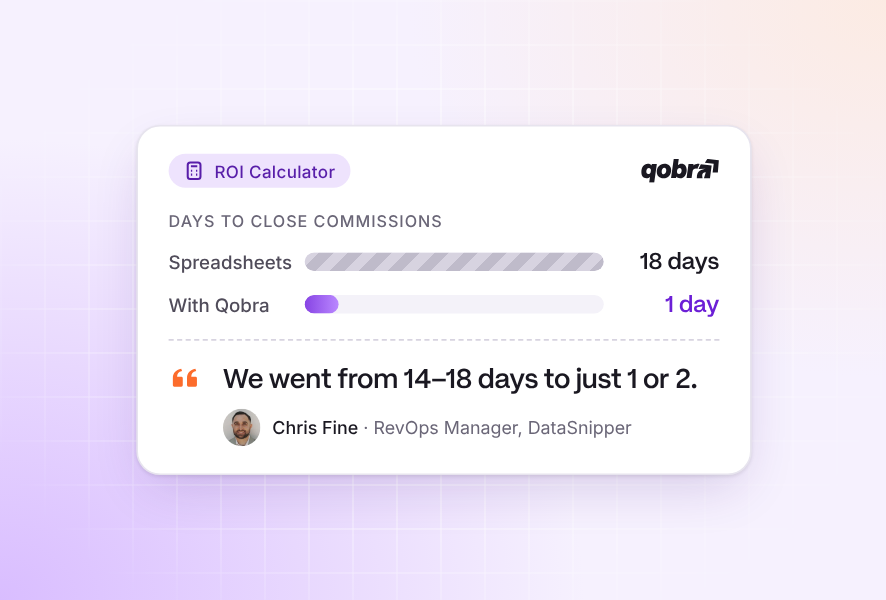
Financial leaders should also assess operational return on investment by modeling potential time savings across month-end calculation cycles, dispute resolution reductions, and administrative efficiencies using our roi calculator. Evaluating these variables provides a solid business case for platform investment. Structuring this financial analysis early clarifies expected efficiency gains for executive sponsors and board reviewers.
Proof-of-Concept Verification — Never finalize a sales compensation management procurement based solely on slide decks or standard demo environments. Require candidate vendors to ingest a sanitized batch of your historical deal data and execute your exact compensation rules within an isolated sandbox environment.
Frequently asked questions
How do you choose between the options for beqom alternatives?
Choose between beqom alternatives by determining whether you require global enterprise pay equity and total workforce compensation or dedicated sales incentive compensation management. Evaluate candidate platforms on no-code plan design flexibility, sandbox modeling against historical data, transparent rep statement visibility, audit governance, and complete multi-year licensing costs.